

In the world of industrial chemistry, few substances carry as much weight as sulfuric acid (H2SO4). Sulfuric acid is the most widely produced chemical in the world; it is a dense, colorless, and highly corrosive mineral acid that serves as a fundamental building block for modern society. While it is vital to many sectors, its most significant contribution is invisible to most: it is the primary engine behind the global fertilizer industry, ensuring food security for billions.
The Versatility of Sulfuric Acid
Sulfuric acid is incredibly versatile due to its strong acidic nature and its ability to act as a dehydrating agent. Beyond the farm, it is used in:
- Metal Processing: Pickling and cleaning steel and copper.
- Oil Refining: Removing impurities during the production of gasoline.
- Chemical Manufacturing: Producing detergents, resins, and plastics.
- Battery Production: Serving as the electrolyte in lead-acid batteries.
However, the agricultural sector is the undisputed leader in consumption. Approximately 60% to 65% of all sulfuric acid produced globally is used specifically to manufacture phosphate fertilizers.
The Gold Standard: The Contact Process
To meet this massive global demand, sulfuric acid must be produced efficiently and at a high scale. While there are various methods, the Contact Process is the most widely used production method today.
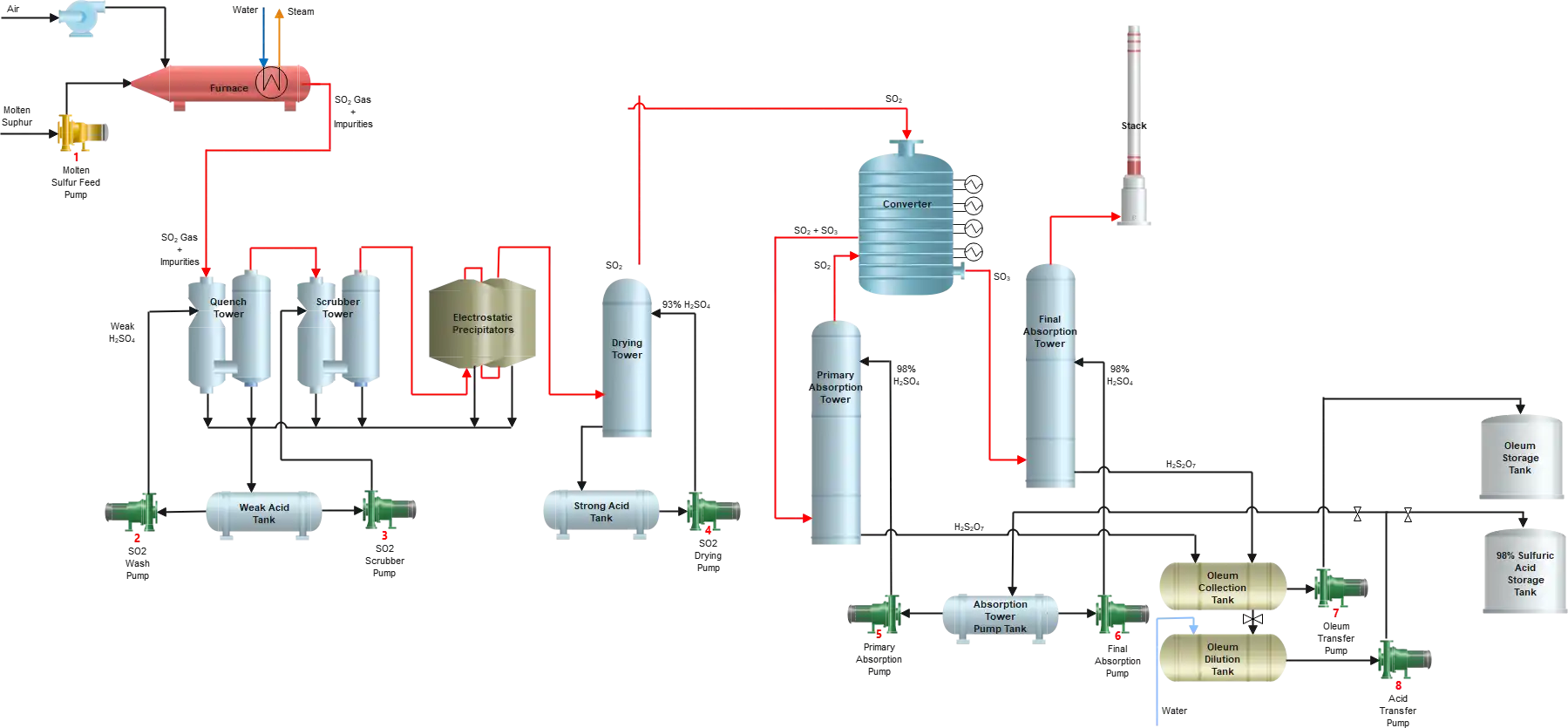
This process involves four primary stages:
- Sulfur Burning: Pure sulfur is burned to create sulfur dioxide gas.
- Catalytic Oxidation: The gas is passed over a catalyst (usually vanadium pentoxide) to convert it into sulfur trioxide.
- Absorption: The sulfur trioxide is absorbed into concentrated sulfuric acid to create “oleum.”
- Dilution: The oleum is carefully mixed with water to reach the desired concentration of sulfuric acid.
The Heartbeat of the Plant: Where Pumps Are Used
In a sulfuric acid plant, pumps are the “circulatory system” that keeps the process moving. Because the chemicals involved are aggressive, the choice of pumping technology is a matter of both efficiency and safety. Key applications include:
- Molten Sulfur Transfer: Pumping liquid sulfur at high temperatures (140°C) into the burner. Honeywell Sundyne’s Marelli VS4 pump is best suited for the high-performance requirements of this application.
- Acid Circulation: Moving concentrated sulfuric acid (98%) through absorption towers to capture gases. Honeywell Sundyne’s Ansimag pumps are best suited to handle the highly corrosive acid, through it’s sealless design and chemical compatibility. For applications needing metallic sealless designs or higher temperatures, Honeywell Sundyne’s HMD Kontro pumps are the best fit.
- Heat Exchanger Circulation: Managing the fluids used to cool the intense heat generated during the chemical reaction.
- Chemical Dosing: Precisely injecting water or additives to achieve the correct acid concentration.
- Effluent Treatment: Handling wastewater and neutralizing chemicals before they leave the facility.

Why Pump Technology Matters
Pumps in this environment do not have an easy job. They must manage aggressive and corrosive chemicals that can dissolve standard metals in a matter of hours. A pump failure doesn’t just stop production; it presents a major safety risk to operators and the environment.
To ensure reliability, these pumps must meet extreme performance requirements:
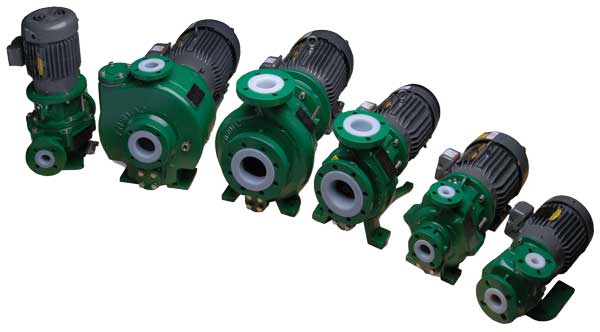
- Corrosion Resistance: Using specialized alloys or lined materials that do not react with the acid. Honeywell Sundyne’s Ansimag sealless pumps are either ETFE or PFA lined and best suited for highly corrosive and heat sensitive Oleum transfer applications. For services where metallic pumps are needed, Honeywell Sundyne HMD Kontro pumps offer robust, sealless pump performance with a range of metallurgies available to suit a variety of acid services.
- Temperature Tolerance: Honeywell Sundyne’s Ansimag pumps deliver safe and leak-free handling for temperatures up to 121°C / 250°F. For higher temperature applications, Honeywell Sundyne HMD Kontro sealless pumps can safely handle temperatures of up to 315°C / 600°F.
- Zero Leakage: Utilizing advanced magnetic drive technologies, Honeywell Sundyne’s Ansimag and HMD Kontro pumps are completely leak free providing total containment of hazardous Oleum and other corrosive substances. Secondary control and containment options are available for additional protection.
- High Efficiency: Operating at peak performance to reduce the energy footprint of the plant is an important consideration for Users. Honeywell Sundyne Ansimag and HMD Kontro sealless pumps utilize highly efficient hydraulic designs with non-metallic shell options – including the HMD Kontro Zero Loss shell – to eliminate induction losses and increase energy efficiency.
Selection Criteria for Operators
When selecting a pump for sulfuric acid production, plant operators should prioritize the following:
- Material Compatibility: Ensure the pump’s “wet-end” materials are specifically rated for the concentration and temperature of the acid being moved.
- Sealing Reliability: Consider sealless (magnetic drive) pumps for hazardous areas to eliminate the risk of seal failure, the most common cause of pump downtime.
- Ease of Maintenance: In a 24/7 production cycle, the ability to service a pump quickly is essential for maintaining “Mean Time Between Maintenance” (MTBM).
- Supplier Expertise: Work with a manufacturer that understands the unique hydraulics of high-density chemicals like sulfuric acid.
- Safety: Sealless pumps are self-contained. The containment shell provides a complete mechanical barrier, preventing leaks, escapes and emissions.
Summary: Ensuring a Sustainable Future
Sulfuric acid remains the backbone of global fertilizer production, turning raw minerals into the nutrients that feed our world. The Contact Process allows for the mass production of this essential acid, but the process is only as reliable as the equipment that manages it.
As a highly corrosive fluid, Sulfuric Acid poses unique challenges in pump design for which Honeywell Sundyne’s Ansimag and HMD Kontro sealless pumps are well suited, not only in terms of corrosion-resistance, but through the leak-free, sealless design with minimal maintenance requirements, improved reliability and reduced lifecycle costs.
High performance pumps are the silent heroes of this industry. By choosing pumps designed for extreme corrosion resistance and leak-free operation, fertilizer producers can ensure a safer, more efficient, and more sustainable supply chain for global agriculture.
For more information: Pump Selection Criteria for Sulfuric Acid Production.


